Most recent BDB-Lab papers
BDB-Lab Links
Major Projects
Other Links
Lab Members
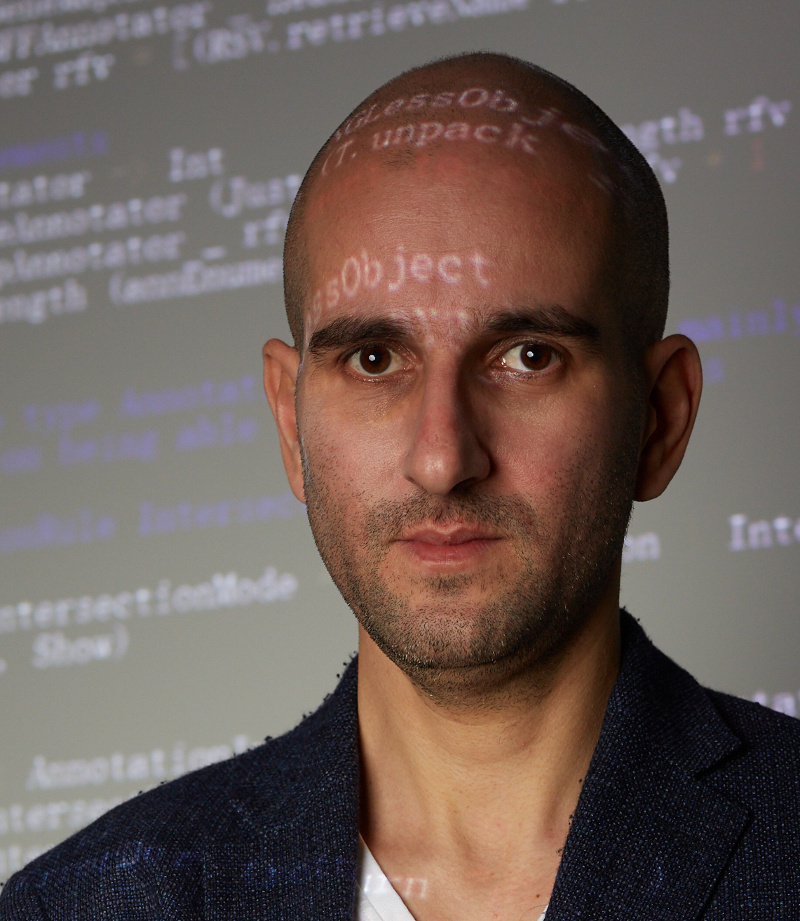
Luis Pedro Coelho
Principal investigator
Luis Pedro Coelho is the principal investigator (PI) of the Big Data Biology Lab at the Centre for Microbiome Research at the Queensland University of Technology (Brisbane, Australia). Previously, the lab was hosted at Fudan University (Shanghai) and, prior to that, he worked as a postdoctoral researcher in Peer Bork's group at the European Molecular Biology Laboratory (EMBL). He has a PhD from Carnegie Mellon University an MSc from Instituto Superior Técnico in Lisbon.
Personal website: https://luispedro.org
BDB-Lab Projects
BDB-Lab Publications
- Micropollutants and the Restructuring of Microbial Resilience in the Anthropocene
- Milk osteopontin alters the infant microbiome to drive DC hematopoiesis and disease tolerance
- The elusive resistome: a global comparison reveals large discrepancies among detection pipelines preprint
- Unbinned contigs expand known diversity in the global microbiome
- Storage and soil depth, in addition to wastewater treatment, govern microbiota, and mobile genetic element and antibiotic resistance markers during reclaimed water irrigation
- Long-read metagenomic sequencing reveals novel lineages and functional diversity in urban soil microbiome preprint
- A gut microbiome-kidney-heart axis predictive of future cardiovascular diseases
- Persistence of High-Risk Antimicrobial Resistance Genes in Extracellular DNA Along an Urban Wastewater-River Continuum
- proGenomes4: providing 2 million accurately and consistently annotated high-quality prokaryotic genomes
- Capturing global pet dog gut microbial diversity and hundreds of near-finished bacterial genomes by using long-read metagenomics in a Shanghai cohort preprint
- AEMB: a computationally efficient abundance estimation method for metagenomic binning preprint
- AI-Driven Antimicrobial Peptide Discovery: Mining and Generation
- argNorm: Normalization of antibiotic resistance gene annotations to the Antibiotic Resistance Ontology (ARO)
- Quest for Orthologs in the Era of Biodiversity Genomics
- A catalog of small proteins from the global microbiome
- Discovery of antimicrobial peptides in the global microbiome with machine learning
- For long-term sustainable software in bioinformatics
- Challenges in computational discovery of bioactive peptides in ’omics data
- A global survey of prokaryotic genomes reveals the eco-evolutionary pressures driving horizontal gene transfer
- Ubiquity of inverted ’gelatinous’ ecosystem pyramids in the global ocean preprint
- Functional and evolutionary significance of unknown genes from uncultivated taxa
- SPIRE: a Searchable, Planetary-scale mIcrobiome REsource
- Towards Monitoring of Antimicrobial Resistance in the Environment: For what Reasons, How to Implement It, and What Are the Data Needs?
- SemiBin2: self-supervised contrastive learning leads to better MAGs for short- and long-read sequencing
- ResFinderFG v2.0: a database of antibiotic resistance genes obtained by functional metagenomics
- metaMIC: reference-free Misassembly Identification and Correction of de novo metagenomic assemblies
- EXPERT: Transfer Learning-enabled context-aware microbial source tracking
- Drivers and Determinants of Strain Dynamics Following Faecal Microbiota Transplantation
- A deep siamese neural network improves metagenome-assembled genomes in microbiome datasets across different environments
- Software testing in microbial bioinformatics: a call to action
- Microbiome and metabolome features of the cardiometabolic disease spectrum
- Impairment of gut microbial biotin metabolism and host biotin status in severe obesity: effect of biotin and prebiotic supplementation on improved metabolism
- Towards the biogeography of prokaryotic genes
- Combinatorial, additive and dose-dependent drug–microbiome associations
- An open code pledge for the neuroscience community preprint
- GUNC: detection of chimerism and contamination in prokaryotic genomes
- Metagenomic assessment of the global diversity and distribution of bacteria and fungi
- Macrel: antimicrobial peptide screening in genomes and metagenomes
- Disentangling the impact of environmental and phylogenetic constraints on prokaryotic within-species diversity
- NG-meta-profiler: fast processing of metagenomes using NGLess, a domain-specific language
- Microbial abundance, activity and population genomic profiling with mOTUs2
- Gene Expression Changes and Community Turnover Differentially Shape the Global Ocean Metatranscriptome
- Global Trends in Marine Plankton Diversity across Kingdoms of Life
- proGenomes2: an improved database for accurate and consistent habitat, taxonomic and functional annotations of prokaryotic genomes
- Meta-analysis of fecal metagenomes reveals global microbial signatures that are specific for colorectal cancer
- Extensive transmission of microbes along the gastrointestinal tract
- Similarity of the dog and human gut microbiomes in gene content and response to diet
- Structure and function of the global topsoil microbiome
Copyright (c) 2018–2026. Luis Pedro Coelho and other group members. All rights reserved.