Long-read metagenomic sequencing reveals novel lineages and functional diversity in urban soil microbiome preprint
Long-read metagenomic sequencing reveals novel lineages and functional diversity in urban soil microbiome
by Yiqian Duan, Anna Cuscó, Yaozhong Zhang, Juan S. Inda-Díaz, Chengkai Zhu, Alexandre Areias Castro, Xinrun Yang, Jiabao Yu, Gaofei Jiang, Xing-Ming Zhao, Luis Pedro Coelho
in bioRxiv
Abstract
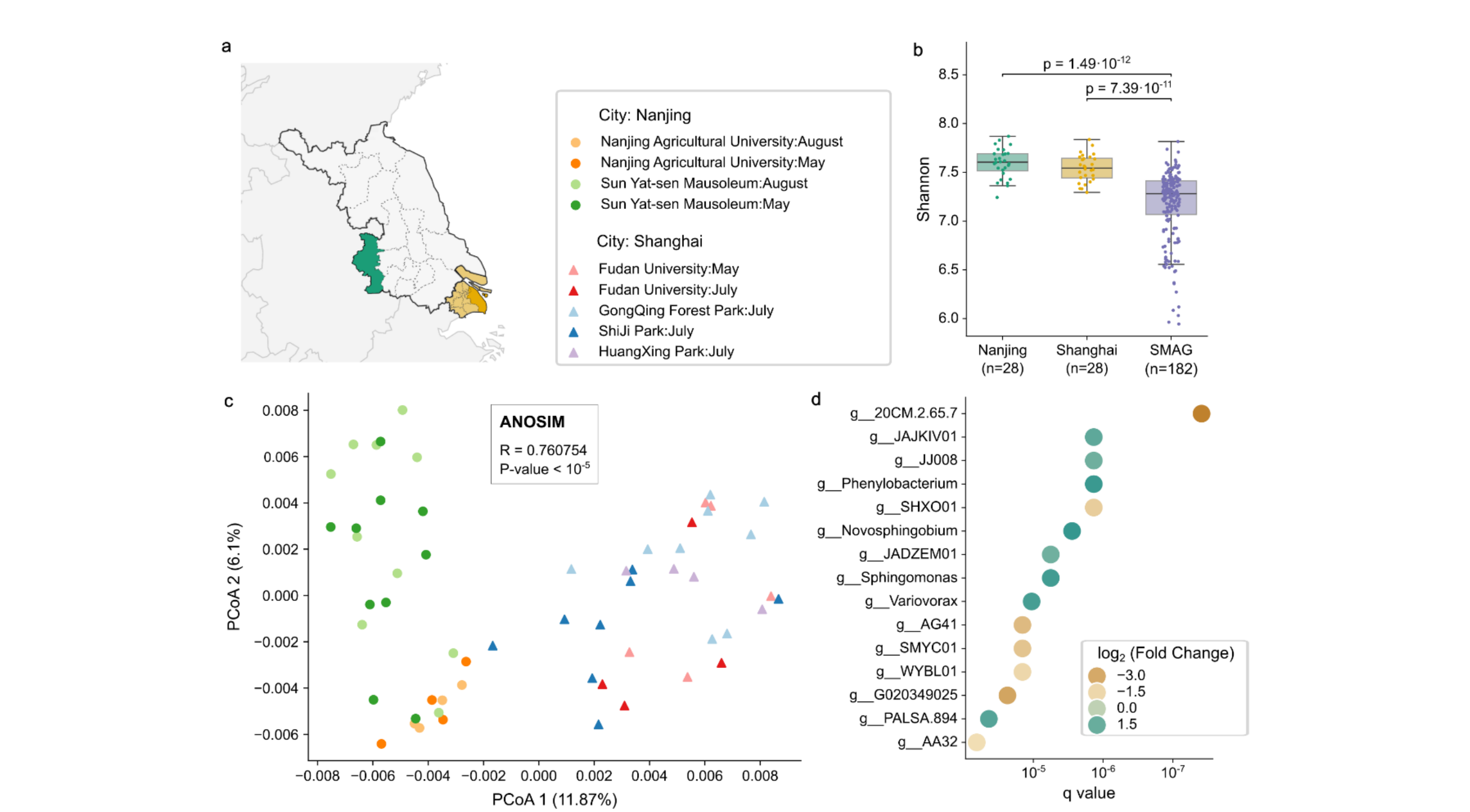
City parks and other urban green spaces can bring significant benefits to the physical and mental health of city residents. However, there is limited knowledge about the microbial communities inhabiting these urban soils. Here, we applied long-read metagenomic sequencing to 58 urban soil samples from two major cities in China, enabling genome-resolved reconstruction of microbial diversity at unprecedented contiguity. We recovered 7,949 medium- and high-quality metagenome-assembled genomes, comprising 4,171 species-level genome bins, of which over 97% represent previously undescribed species. Long-read assemblies revealed extensive secondary metabolic capacity, including more than 30,000 biosynthetic gene clusters, which were highly contiguous compared with those from fragmented short-read assemblies. Beyond secondary metabolism, we uncovered over 2 million small protein families, including hundreds that are strongly enriched in the neighbourhood of defense systems and mobile genetic elements, highlighting their overlooked role in urban soils. These findings expand our understanding of the functional diversity of urban soil microbiomes and provide new insights with implications for urban public health.
Full text: https://doi.org/10.64898/2026.03.20.713087
Copyright (c) 2018–2026. Luis Pedro Coelho and other group members. All rights reserved.